Gentle Endodontic Treatment — Futch Dental
If you're dealing with a severe toothache, lingering sensitivity, or swelling around a tooth, a root canal may be exactly the relief you need. Despite its reputation, a modern root canal is a comfortable, routine procedure designed to eliminate pain—not cause it. At Futch Dental, Dr. Futch brings more than 35 years of experience and a genuinely gentle approach to every root canal he performs, helping patients save their natural teeth and get back to feeling normal.
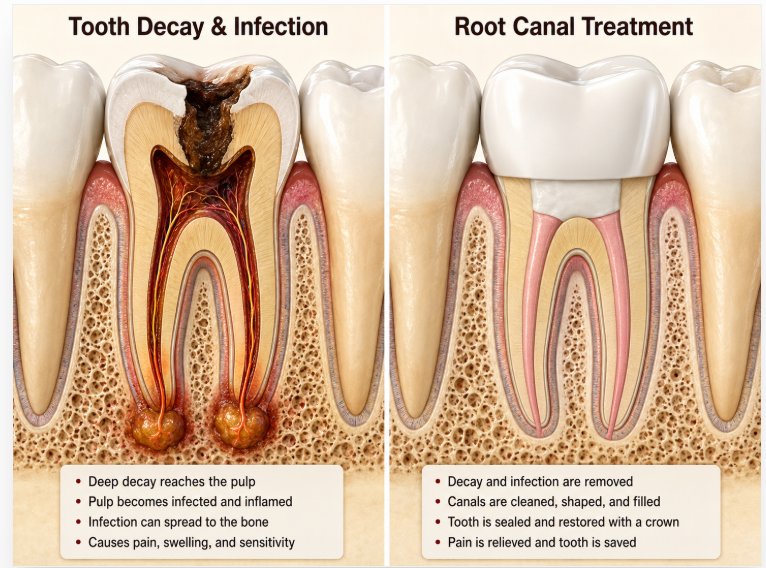
Inside every tooth, beneath the hard outer layers of enamel and dentin, is a soft tissue called pulp. The pulp contains nerves, blood vessels, and connective tissue that helped the tooth develop when you were young. Once a tooth is fully mature, it can survive without the pulp because it continues to receive nourishment from the tissues surrounding the root.
A root canal—also called endodontic treatment—becomes necessary when the pulp becomes infected or irreversibly inflamed. This can happen due to deep decay, a crack or fracture, trauma to the tooth, or damage from repeated dental procedures. During the treatment, Dr. Futch removes the infected pulp, thoroughly cleans and disinfects the interior of the tooth, fills the root canals with a biocompatible material, and seals the tooth to prevent reinfection. The procedure saves the natural tooth and eliminates the source of pain.
Not every toothache means you need a root canal, but there are specific symptoms that may indicate the pulp inside your tooth is infected or dying. Watch for:
If you're experiencing any of these symptoms, call our office at (775) 746-1177. Dr. Futch can evaluate the tooth, take digital X-rays, and determine whether a root canal or another treatment is the best path forward. Same-day emergency appointments are available for patients in acute pain.
A root canal is very similar to getting a filling—just a bit more involved. Most treatments are completed in one to two appointments, depending on the tooth and the extent of infection. Here's what to expect:
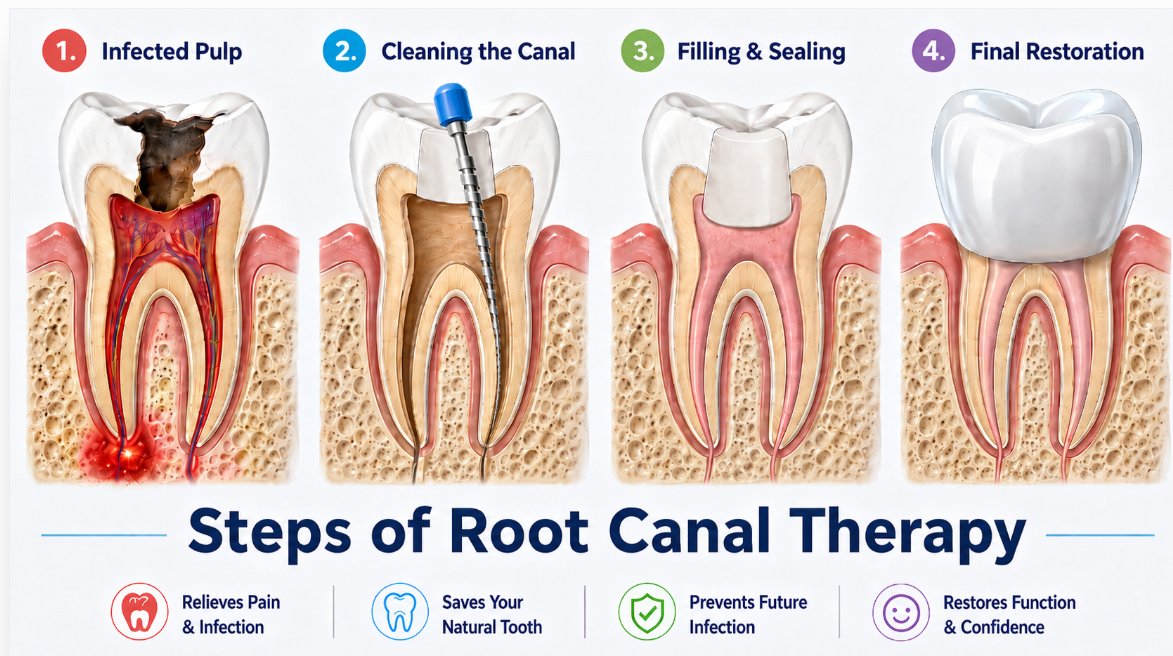
Dr. Futch examines the tooth and takes digital X-rays to assess the extent of infection, evaluate the root structure, and confirm that root canal therapy is the right treatment.
The tooth and surrounding area are completely numbed with local anesthesia. Once you're comfortable, Dr. Futch places a small protective shield over the tooth to keep it dry and isolated during the procedure.
A small opening is made in the top of the tooth to access the pulp chamber. Dr. Futch carefully removes the infected or inflamed pulp tissue from the chamber and root canals using precision instruments.
The interior of the tooth is thoroughly cleaned, shaped, and disinfected to eliminate all traces of bacteria and prevent reinfection. This step is critical to the long-term success of the treatment.
The cleaned root canals are filled with a biocompatible material called gutta-percha and sealed with adhesive cement to prevent bacteria from re-entering the tooth.
In most cases, a tooth that has had a root canal will need a dental crown to restore its strength and protect it from fracture. Dr. Futch will discuss the best restoration option for your tooth. Learn more on our Dental Crowns & Bridges page.
Root canals have an outdated reputation that no longer matches reality. With modern techniques, advanced instruments, and effective local anesthesia, the procedure itself is typically no more uncomfortable than getting a filling. In fact, the root canal relieves pain—it doesn't cause it. The infection inside the tooth is what's causing your discomfort, and removing it is the solution.
Most patients tell us the experience was far easier than they expected. Dr. Futch takes a patient, unhurried approach, explains each step before it happens, and makes sure you're completely comfortable throughout the procedure.
Recovery from a root canal is typically straightforward. Here's what most patients experience:
If you experience significant pain, swelling, or fever after your root canal, contact our office right away. These symptoms are uncommon but should be evaluated promptly.
Whenever possible, saving your natural tooth is the best outcome—and that's exactly what a root canal is designed to do. Here's why it matters:
No. The procedure is performed under local anesthesia, so you'll feel no pain during treatment. Most patients compare it to getting a filling. The root canal actually relieves the pain caused by the infection inside the tooth.
Most root canals are completed in one to two appointments, with each visit typically lasting 60 to 90 minutes depending on the tooth and the complexity of the case.
In most cases, yes. A tooth that has had a root canal loses some of its internal structure and can become more brittle over time. A crown restores the tooth's full strength and protects it from fracture.
With proper care, a root canal-treated tooth can last a lifetime. Studies show that about 90 percent of treated teeth survive 10 years or more. Good oral hygiene, regular dental visits, and a well-fitting crown all contribute to long-term success.
An infected tooth will not heal on its own. Without treatment, the infection can spread to the surrounding bone, gums, and even other areas of the body. The pain will likely worsen, and the tooth may eventually need to be extracted.
Saving your natural tooth is almost always the better option. A root canal preserves your natural tooth structure, maintains your bite alignment, and is generally less expensive than extraction followed by replacement with an implant or bridge.
Yes. Most patients return to normal activities the same day. You'll be numb for a few hours after the procedure, so avoid eating until the anesthesia wears off, but otherwise there's no downtime required.
Cost depends on which tooth is affected and the complexity of the case. Molars are more complex and typically cost more than front teeth. Most dental insurance plans provide coverage for root canal treatment. Our team will review your benefits and provide a clear estimate before treatment begins.
If you're living with a toothache, putting off treatment only gives the infection more time to spread. A root canal at Futch Dental can relieve your pain, eliminate the infection, and save your natural tooth—often in a single visit. Dr. Futch and our team will take the time to explain everything, answer your questions, and make sure you're comfortable from start to finish. Call our Reno office today at (775) 746-1177 or click below to schedule your consultation. Same-day emergency appointments are available.